
Root Canal Treatment in Ampang
Root canal treatment clears the infection from inside a tooth, so the tooth itself can stay.
What patients are saying
Real reviews from real patients, in their own words.
What is Root Canal Treatment?
Inside every tooth is soft tissue called the pulp. When deep decay or a crack lets bacteria reach it, the pulp becomes infected and the tooth starts to ache, often with hot, cold or biting.
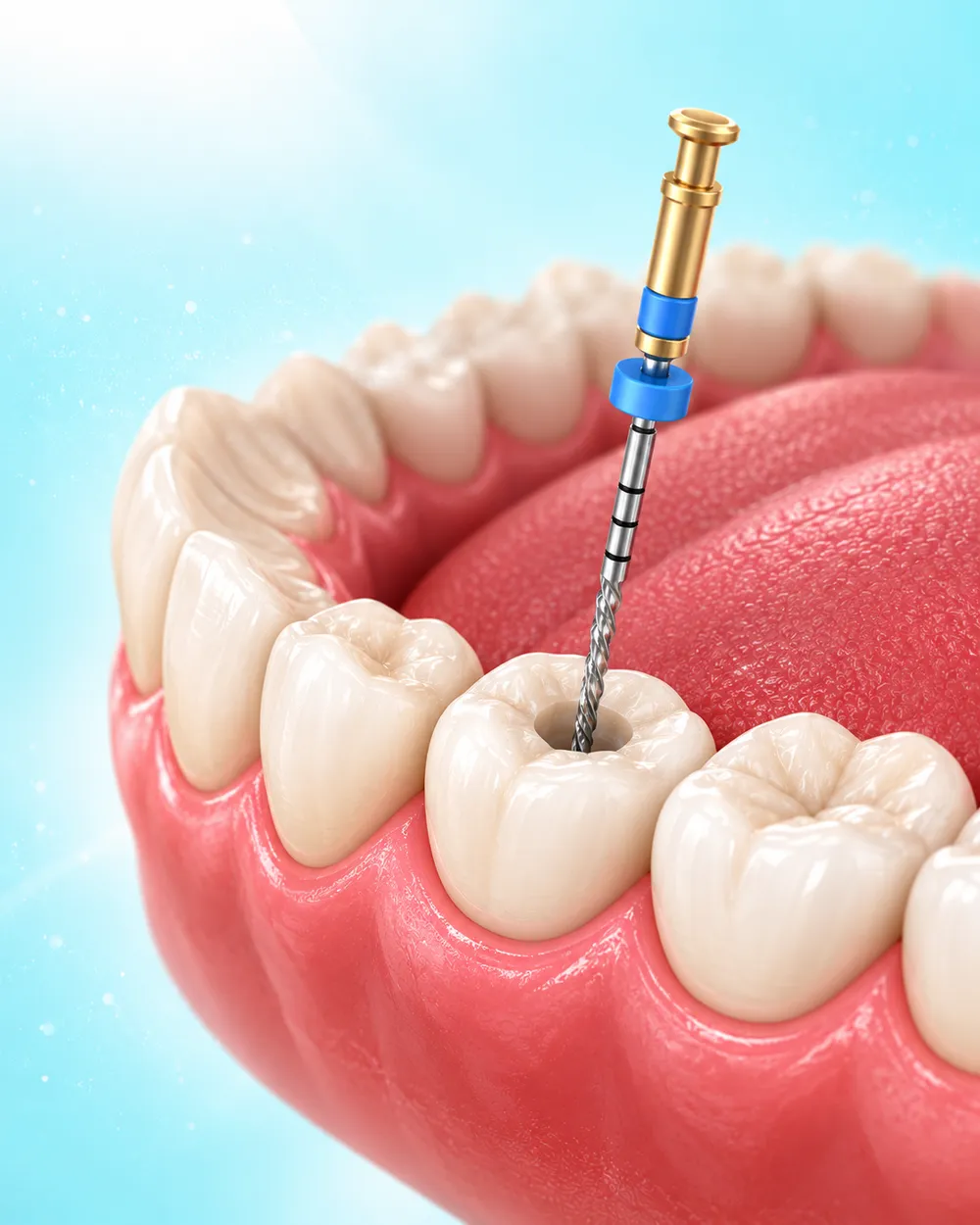
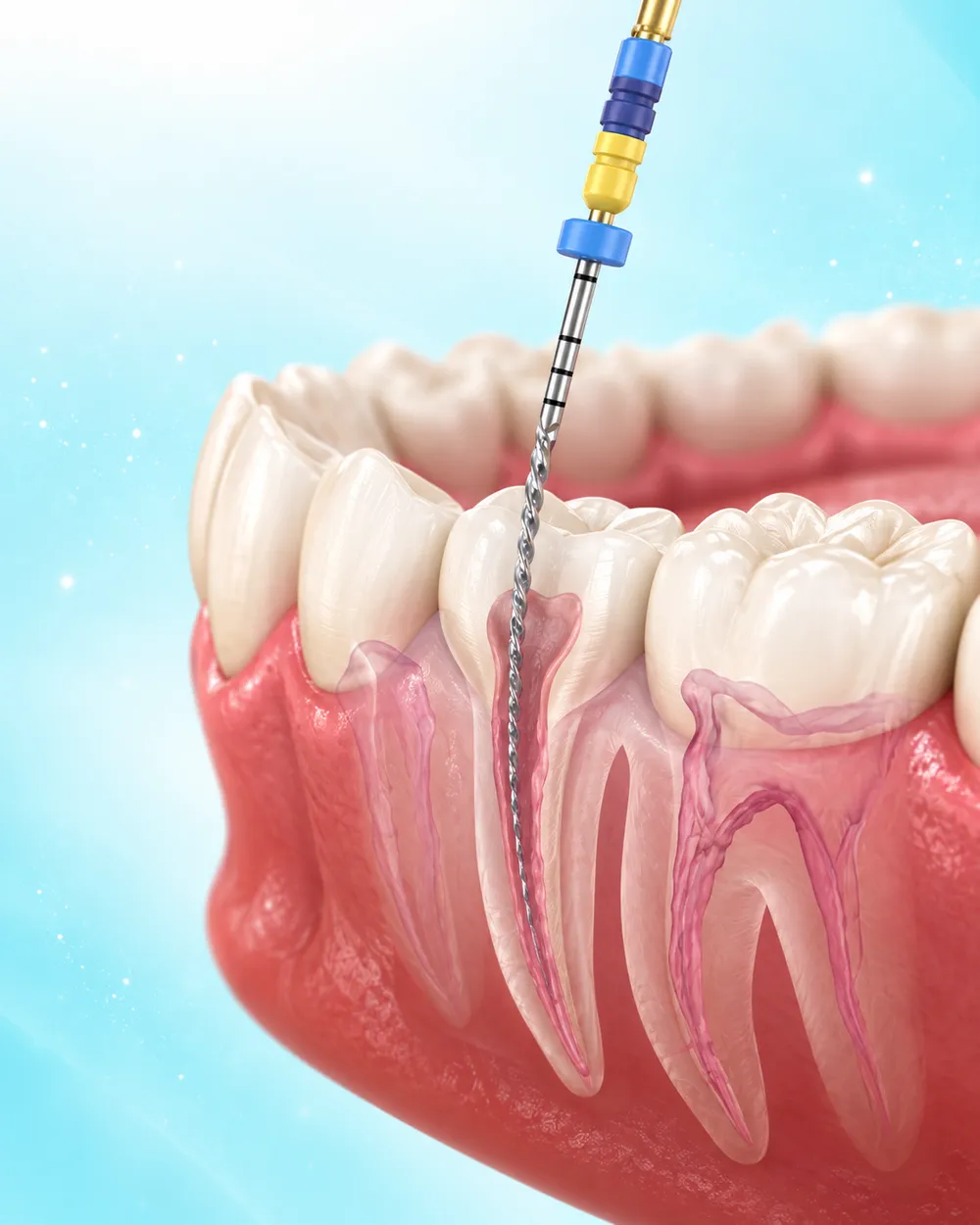
Root canal treatment removes that infected pulp, cleans and shapes the canals inside the root, then seals them so the infection can't come back. Your tooth stays where it is.
Dr. Liew performs root canal treatment under a high-magnification operating microscope, which helps him find and clean canals that are hard to see with the naked eye. We'll take an X-ray first and explain exactly what we see before anything starts.
Your treatment, step by step.
A closer look
We examine the tooth and take an X-ray to confirm whether the pulp is infected and the tooth can be saved.
Cleaning the canals
With the area numbed, the infected pulp is removed and the canals are cleaned and shaped.
Sealing
The cleaned canals are filled and sealed to keep bacteria out.
Protecting the tooth
Most treated teeth, especially back teeth, then need a crown to protect them from cracking.
Could Root Canal Treatment Be Right for You?
Root canal treatment is recommended when a tooth's pulp is infected or damaged but the tooth itself is still worth saving.
If a tooth is hurting, come in sooner rather than later. The earlier we see it, the better the chance of saving it.
A tooth aches on its own, or lingers after hot or cold food.
It hurts to bite down on one particular tooth.
You've been told a tooth's nerve is infected or damaged.
You'd rather save a tooth than have it removed.
Keeps your own tooth
Saving a natural tooth is almost always better than removing it, and that's what this treatment is for.
Done under a microscope
Dr. Liew treats root canals under a high-magnification microscope to see the fine details inside the tooth.
Eases the pain at its source
It treats the infection causing the toothache, not just the symptom.
Frequently asked questions.
The questions patients ask us most about Root Canal Treatment, answered plainly.
The tooth is numbed with local anaesthetic first, so for most patients it feels similar to having a filling. Many people feel relief afterwards, because the infection causing the pain has been treated.
Often one to three visits, depending on the tooth and how far the infection has spread. We'll tell you the plan before we start.
Root canals are tiny and can branch in ways that are hard to see. Magnification helps Dr. Liew find and clean them thoroughly, which matters for the tooth's long-term health.
Usually, yes, especially for back teeth that take most of the chewing pressure. A treated tooth can be more brittle, and a crown protects it.
The infection can spread, cause swelling, and the tooth may eventually need to come out. Treating it early gives you the best chance of keeping it.
Got a tooth that won't stop aching?
Message us and we'll take a closer look as soon as we can.